An e-commerce order can pass through software, storage, picking, packing, and delivery before it reaches your door. Robots will change each step, but the useful gains will come from linking those steps without creating new delays.
Quick read
- Mobile robots can carry shelves, totes, and packed orders across a warehouse.
- Robotic arms still need clear item data, steady lighting, and controlled handoffs.
- The next test is simple: can the system keep working when an order or object looks different?
Where robots fit today
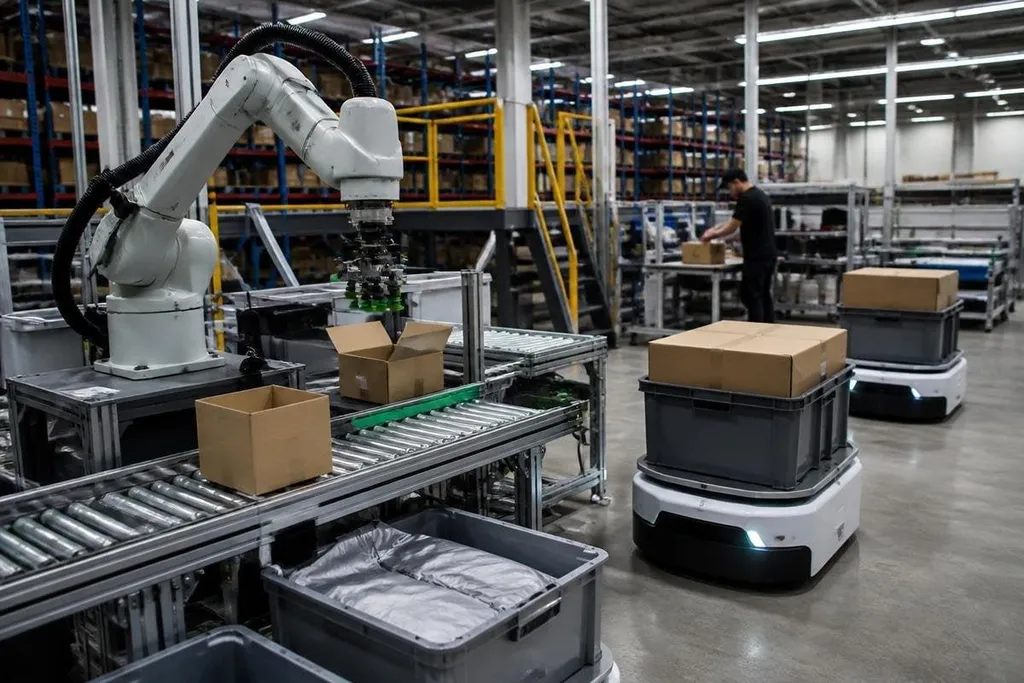
Most e-commerce robots handle a narrow job. An autonomous mobile robot, or AMR, moves stock or totes between fixed work areas. A robotic arm picks items from a bin, places them in a new container, or sorts parcels by destination.
That split matters because movement and handling create different problems. An AMR can follow a mapped route with cameras or LiDAR, a sensor that measures distance with light. The arm still has to find the object, choose a grip, and place it without damaging the order.
Software links the two jobs. An order system tells the warehouse what to pick, while a fleet system assigns routes to the AMRs. The handoff works only when both systems agree on the item, location, container, and next task.
A robot that waits for missing data has not saved much time. It has moved the delay to another part of the building.
The hard part is picking
Moving a sealed tote is easier than picking a loose item. A tote has a known shape and a clear space for the robot to grip. A pile of clothing, a soft package, or a reflective object gives the arm less useful information.
The arm needs more than a camera image. It may need the item’s size, weight, packaging type, and barcode location. That data helps software choose a grip and tells the robot how much force to use.
The work also changes with the product mix. A warehouse handling identical boxes can use fixed positions and repeatable movements. A store selling many item types needs the robot to cope with changes that a clean demo may avoid.
This is why picking will likely remain a mix of robot work and human work for some time. People can handle an object that looks wrong or arrives in damaged packaging. Robots can take over repeatable movements around that decision.
Handoffs decide the business case
A robot can move faster than a person in one part of the process and still fail to raise output. The full order only moves as fast as its slowest handoff.
For example, an AMR may bring a tote to a picking station, but the arm may stop when the item is hidden under another item. A person then clears the bin, checks the item, and restarts the task. The robot has reduced walking, yet the station still waits.
E-commerce companies will need records that show where time goes. Useful measures include completed picks, waiting time at each station, failed grasps, damaged items, and the minutes needed to restart a task. A single speed figure tells you little without those figures beside it.
Those figures also show where a new e-commerce robot still needs people. Robot 24 can help you compare warehouse claims with the task, test date, failure rate, and human action recorded after each problem. The next systems need to reduce those manual stops, rather than post a higher speed figure.
What the next systems need
The next useful systems will likely share data more cleanly and recover from small errors. That does not mean every robot will work without people. It means a person should be called only when the system has reached a problem it cannot handle.
Recovery also needs a clear record. If an arm fails to pick an item, the software should save the image, grip attempt, item code, and reason for the stop. Engineers can then fix a repeated fault instead of guessing from a missed order.
Safety will shape the layout too. AMRs need marked paths, speed limits, warning signals, and stopping rules around people. Arms need guarded work areas or sensors that stop motion when a person enters the reach zone.
A buying checklist for e-commerce teams
Before choosing a robot system, check these points:
- Name the task: Count walking, picking, packing, and handoff time separately.
- Test the product mix: Include soft goods, reflective packaging, odd shapes, and damaged cartons.
- Check the data path: Confirm how order software, warehouse software, and robot controls exchange item and location data.
- Measure recovery: Record failed picks, manual resets, and the time needed to restart work.
- Price the full setup: Add software, racks, safety equipment, training, service, and floor changes.
A pilot should run on normal orders, not only on items prepared for a camera. The useful result is the number of orders completed after errors, pauses, and product changes enter the process.
I’d wait before calling any e-commerce robot a full replacement for warehouse staff. The better near-term case is a system that moves stock, cuts walking, and sends people the few tasks that still need judgment.
The question for the next purchase is not how quickly one robot moves; it is how many complete orders the whole chain finishes in a shift.